
Start Reverse at Future Hospitality Summit in Saudi Arabia, where Culture creates Value
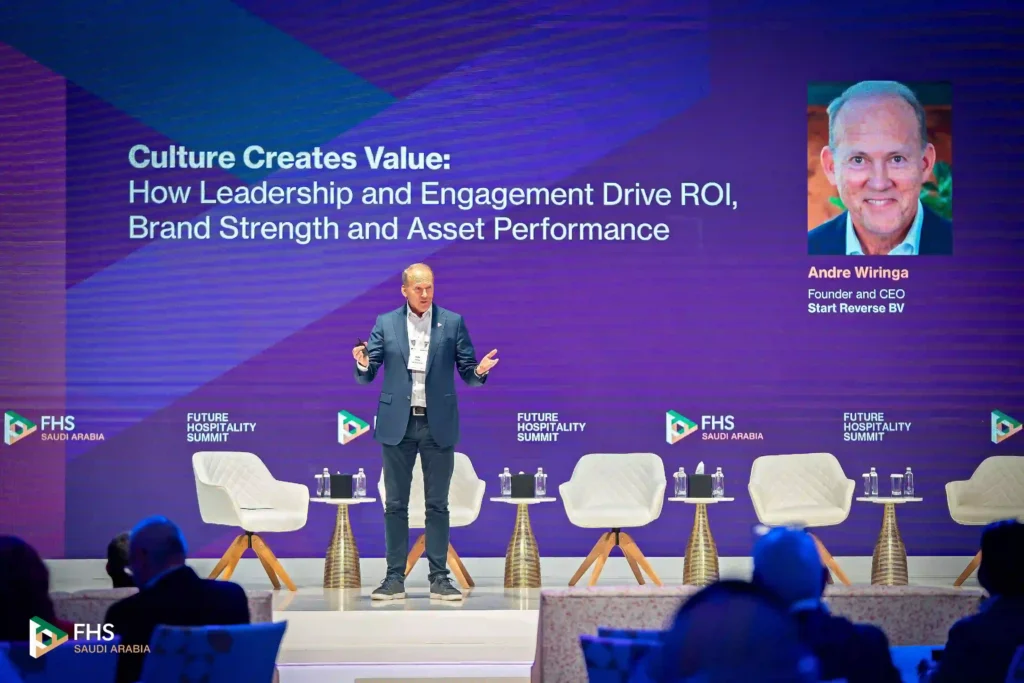
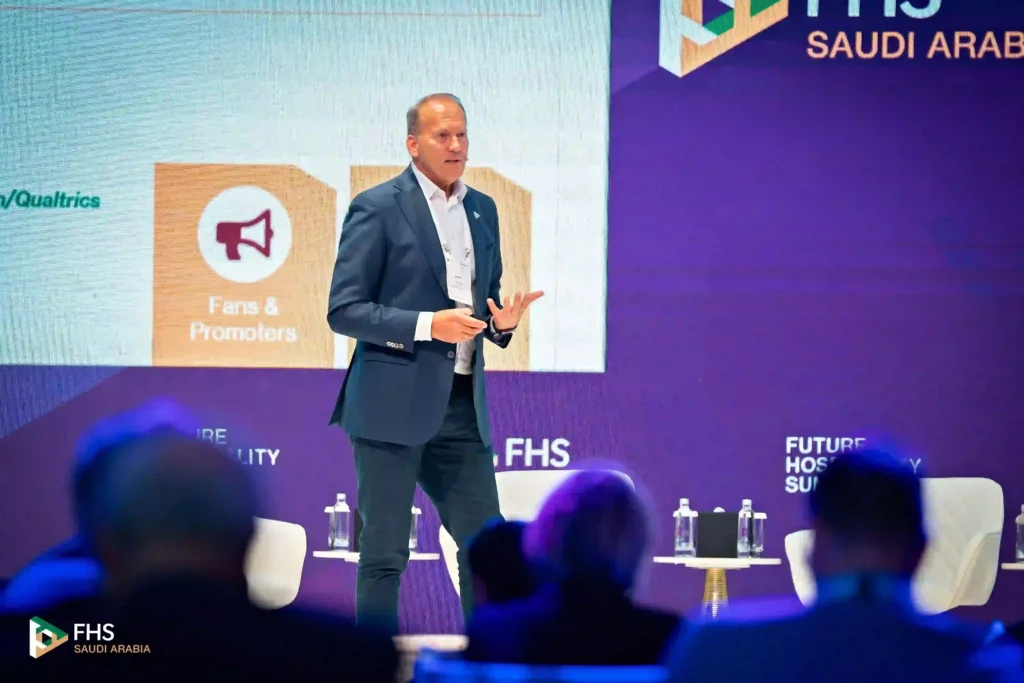
André Wiringa, Founder & CEO of Start Reverse, took the stage in Riyadh this June as moderator of a headline panel at the Future Hospitality Summit (FHS) Saudi Arabia, one of the region’s most influential gatherings of hotel investors, operators and developers. His session, “Culture Creates Value: How Leadership and Engagement Drive ROI, Brand Strength and Asset Performance,” made the case that in a market building hospitality infrastructure at record pace, the next competitive edge won’t come from bricks and mortar alone; it will come from culture.
Where Opportunity Meets Capital
FHS Saudi Arabia 2026 ran from June 22 to 24 at the Mandarin Oriental Al Faisaliah under the theme “Where Opportunity Meets Capital.” The summit drew more than 1,100 industry leaders and investors, supported by a programme of over 150 speakers covering hotel investment, real estate, technology, wellness and lifestyle. Delegates travelled from the United States, United Kingdom, Spain, Switzerland, Bahrain, Morocco and dozens of other markets to take part.
The scale of capital in the room was significant: attendees collectively represented roughly $5.6 trillion in assets under management, with 81% C-level representation and around a quarter of participants classified as active investors. The event generated an estimated $1.6 billion in business opportunities and produced 11 landmark deals, reinforcing Riyadh’s role as a meeting point for capital, operators, developers and government.
That momentum reflects Saudi Arabia’s broader Vision 2030 ambitions: the Kingdom is targeting more than 500,000 new hotel rooms and 150 million annual visitors by 2030, backed by SAR 42 billion in hospitality investment through the Hospitality Investment Enablers programme. Tourism already contributed an estimated $178 billion to Saudi GDP in 2025, roughly half of the entire Middle East’s travel and tourism GDP, making the Kingdom the region’s single biggest driver of hospitality growth, and the reason FHS has become essential ground for global hoteliers and investors alike.
From Hardware to Heartware
Wiringa framed his panel around a simple but pointed idea: Saudi Arabia is building hospitality “hardware”, rooms, airports, resorts, destinations, at a pace the world has rarely seen. But hardware alone doesn’t create lasting value. That requires “heartware”: the people, purpose and culture that sit inside the buildings.
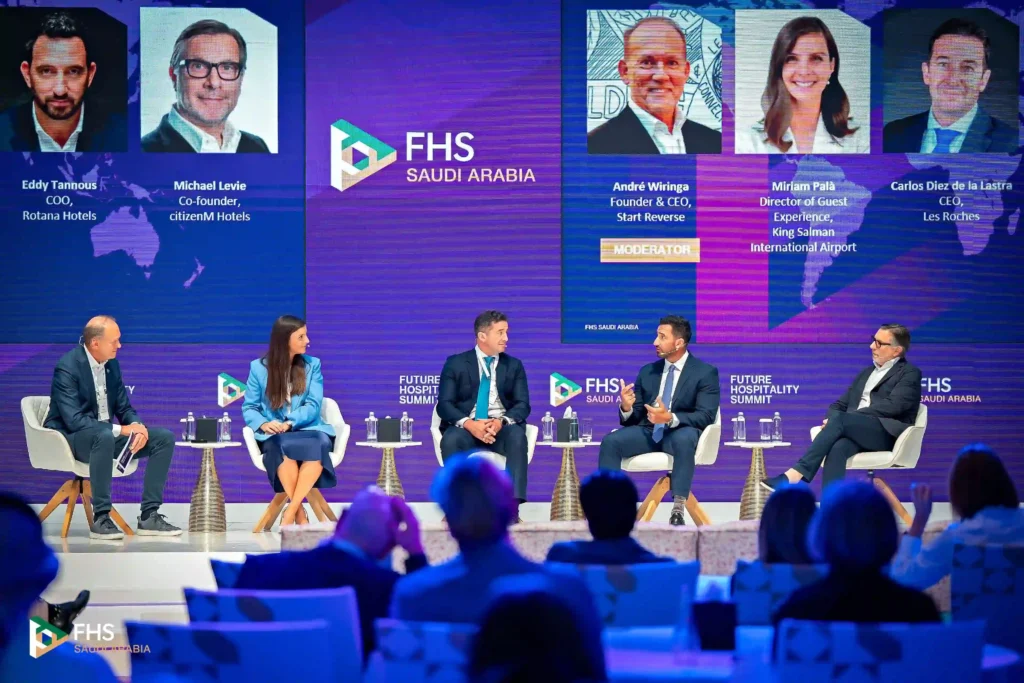
He was joined on stage by Miriam Palà, Director of Guest Experience at King Salman International Airport; Carlos Diez de la Lastra, CEO of Les Roches; Eddy Tannous, COO of Rotana Hotels; and Michael Levie, Co-founder of citizenM Hotels, a panel spanning airports, hospitality education, regional hotel operations and global brand innovation.
Together, the panel walked through what Start Reverse calls the “Heartware Value Chain”: a direct, evidence-backed line from purpose and identity, to engagement, to performance, to guest experience, to brand advocacy, to brand value, and ultimately to property and destination value.
The data underpinning each link was striking. Only 21% of employees worldwide are engaged at work, according to Gallup, with disengagement costing the global economy an estimated $8.8 trillion, about 9% of global GDP. Yet managers alone explain roughly 70% of the variance in team engagement, and workplaces with weekly recognition see 2.7 times higher engagement and 31% lower voluntary turnover. Engaged business units, in turn, generate 23% higher profit, a number Wiringa argued belongs in the finance conversation, not just HR.
That engagement flows straight through to the guest experience. The panel cited the Ritz-Carlton’s famous “$2,000 rule,” where empowering employees to resolve guest issues on the spot builds trust that shows up in the numbers: organisations that empower employees see 50% higher customer loyalty, and 60% of luxury travellers say they’ll pay more for personalised experiences. The correlation between guest satisfaction scores and financial performance is remarkably strong; properties in the top NPS quartile earn 8–12% higher RevPAR than the bottom quartile in the same market, with each additional point in guest score worth roughly 1.4% in RevPAR.
That premium compounds up the chain into brand and asset value. A strong brand flag can add 20–40% to a hotel’s value and command 6–8% rental yields versus 4–5% for unbranded assets, giving owners real leverage in rent and lease negotiations. Branded residences carry the effect even further: buyers pay a 31% premium for Emaar-branded homes over comparable unbranded properties, and branded-residence supply across the MENA region has grown 187% in five years, the fastest of any region globally.
The Takeaway for Saudi Hospitality
The panel’s core message resonated with the summit’s broader theme of capital meeting opportunity: as Saudi Arabia adds hundreds of thousands of rooms and welcomes waves of new visitors, the operators, owners and destinations that invest as deliberately in culture and people as they do in construction will be the ones that capture the greatest share of value. For Start Reverse, the conversation in Riyadh reinforced a conviction the firm has long championed, that culture isn’t a soft add-on to hospitality strategy, but a measurable driver of ROI, brand strength and long-term asset performance.
let's talk
We are looking forward to talking to you !
Please fill out the contact form below and we will reach out to you within 24 hours.
Do you have a more urgent question?
Feel free to give us a call at +31 (020) 237 47 18
